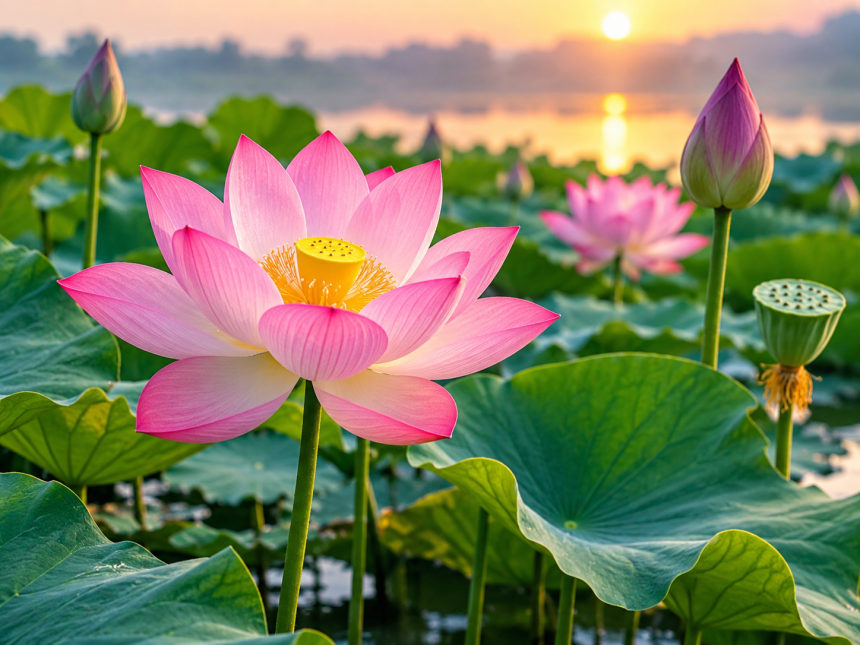
The lotus flower is an aquatic flowering plant known for its large, round leaves and distinctive flowers that rise above the water. Scientifically, the sacred lotus is called Nelumbo nucifera, and it is native to parts of Asia and Australia. Lotus plants grow from underwater rhizomes rooted in mud, while their flowers and leaves emerge above the water. The plant has cultural, ornamental, culinary, and traditional uses.
What Is a Lotus Flower?
The lotus flower is the blossom of an aquatic plant that belongs to the genus Nelumbo. It is often confused with water lilies because both grow in ponds and lakes, but they are different plants.
Lotus plants typically grow in shallow, still or slow-moving water. Their underground stems, called rhizomes, remain buried in wet soil or mud. Long stalks extend upward from the rhizomes, carrying leaves and flowers above the water’s surface.
What Does a Lotus Flower Look Like?
A lotus flower has numerous petals arranged around a central seed structure. Depending on the variety, flowers can be white, pink, red, yellow, or combinations of these colors. The leaves are usually large, circular, and held above the water rather than floating directly on its surface.
The central part of the flower develops into a distinctive seed pod containing several individual seeds. This unusual structure is one of the most recognizable features of the lotus plant.
Where Does the Lotus Flower Grow?
The lotus flower grows naturally in warm regions of Asia and Australia and is also cultivated in many other parts of the world. It is especially associated with ponds, wetlands, marshes, and other shallow-water environments.
Lotus plants generally need plenty of sunlight and warm conditions to grow well. They are commonly cultivated in garden ponds, ornamental water features, and agricultural areas where their edible parts are harvested.
What Conditions Does Lotus Need to Grow?
Lotus plants grow best in full sunlight and nutrient-rich, muddy or aquatic soil. They need sufficient water depth to keep their roots and rhizomes submerged while allowing their leaves and flowers to reach above the surface.
For home cultivation, a large container or pond can be used. The plant needs enough space because its rhizomes can spread considerably as the plant matures.
What Does the Lotus Flower Symbolize?
The lotus flower commonly symbolizes purity, renewal, resilience, and spiritual growth, although its meaning varies between cultures and traditions.
Because lotus plants grow from muddy water while producing flowers that appear clean and elevated above the surface, the plant has become a powerful cultural symbol. In several Asian religious and philosophical traditions, the lotus is associated with spiritual development and transformation.
Lotus in Buddhism and Hinduism
The lotus has important symbolic roles in both Buddhism and Hinduism. In Buddhist traditions, it can represent purity, awakening, and the journey toward enlightenment.
In Hindu traditions, the lotus is associated with several deities and is often connected with beauty, prosperity, knowledge, and spiritual purity. Its meaning can differ depending on the specific tradition and context.
Can You Eat Lotus?
Several parts of the lotus plant are edible, including its seeds and rhizomes. Lotus root is widely used as a food ingredient in various Asian cuisines.
Lotus seeds can be eaten fresh, dried, or processed into other foods. The rhizome, commonly called lotus root, has a crisp texture and a distinctive pattern of holes when sliced. It is often cooked in soups, stir-fries, and other dishes.
Are Lotus Seeds Nutritious?
Lotus seeds provide carbohydrates, protein, fiber, and several minerals. Their nutritional value varies depending on whether they are fresh, dried, roasted, or otherwise processed.
As with any food, preparation matters. Packaged or prepared lotus products can contain additional salt, sugar, or other ingredients, so nutritional content should be considered according to the specific product.
How Does a Lotus Flower Grow?
A lotus flower begins its growth from an underground rhizome rather than from a seed alone. The rhizome produces roots, leaves, and flowering stems as the plant develops.
- The rhizome remains underwater. It grows through mud or aquatic soil.
- Leaves emerge from the water. Long stalks carry the leaves upward.
- Flower buds develop. Flowering stems rise above the water.
- The flower opens. The petals gradually spread, exposing the central reproductive structures.
- Seeds develop after flowering. The seed pod matures and eventually releases or contains seeds for propagation.
This growth cycle allows lotus plants to survive seasonal changes and return when suitable growing conditions return.
Lotus Flower vs. Water Lily: What Is the Difference?
Lotus flowers and water lilies are different plants even though they share similar aquatic habitats. One of the easiest ways to distinguish them is by looking at their leaves and flowers.
Lotus leaves commonly rise above the water on strong stalks, while many water lily leaves float directly on the water’s surface. Lotus flowers also typically stand above the water, whereas water lily flowers often sit closer to the surface.
Why Is the Lotus Flower Important?
The lotus flower is important because it combines ecological, cultural, ornamental, and practical value. It provides habitat and food resources within aquatic environments while also being cultivated for gardens and traditional foods.
Its cultural importance is particularly strong across South and East Asia. The flower appears in art, architecture, literature, religious imagery, and traditional symbolism, making it much more than an ornamental pond plant.
Conclusion
The lotus flower is a remarkable aquatic plant recognized for its beautiful flowers, distinctive leaves, edible parts, and deep cultural symbolism. Growing from rhizomes in muddy water, lotus plants produce flowers that rise above the surface and have become symbols of purity and renewal in several traditions. Readers interested in this plant may also explore lotus cultivation, lotus seeds, water lilies, and the cultural history of the lotus.