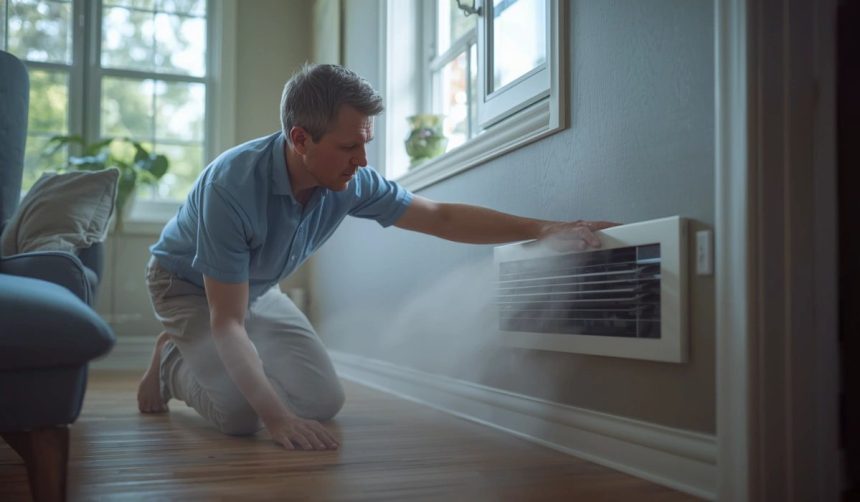
You set the thermostat to a comfortable 70 degrees, but your home feels stuffy in summer and drafty in winter. Meanwhile, energy bills keep climbing despite keeping your HVAC system running constantly. If this sounds familiar, your home is likely leaking conditioned air.
When cooled or heated air escapes through hidden gaps, unsealed ductwork, or under-insulated attics, your HVAC system works twice as hard. This air loss strains equipment, worsens indoor air quality, and inflates utility expenses.
Recognizing the subtle signs of air leakage allows you to restore efficiency before minor leaks turn into costly repairs.
1. Unexplained Spikes in Monthly Energy Bills
The Sign: Your utility bills increase significantly month-over-month without a shift in outdoor weather or household habits.
When a home has a compromised barrier, conditioned air constantly escapes while outside air infiltrates your living space. To compensate, your furnace or air conditioner runs longer cycles to offset thermal transfer.
An unexpected increase of 15% to 30% on your energy bill is often the first financial indicator of air loss. Tracking your kilowatt-hour (kWh) or therm consumption against previous years helps confirm whether your home is consuming excess energy to make up for escaping air.
2. Inconsistent Temperatures and Hot Spots
The Sign: Certain rooms feel noticeably hotter or colder than the rest of the house, regardless of how long the HVAC runs.
If your living room feels icy cold while an upstairs bedroom remains stifling hot, conditioned air is failing to distribute evenly. This thermal disparity occurs when air leaks out of supply ducts before reaching distant vents or when poor insulation allows heat to penetrate exterior walls.
Inconsistent temperatures indicate that your home’s thermal envelope performance has degraded. Cold or warm spots usually point directly to compromised ceiling cavities, unsealed knee walls, or failing window flashing.
3. Persistent Drafts Near Windows, Doors, and Outlets
The Sign: You feel a distinct air current or temperature drop near exterior walls, baseboards, or wall outlets.
Drafts are direct proof of uncontrolled air exchange. While window frames and door thresholds are obvious culprits, conditioned air also slips out through less obvious wall penetrations.
Unsealed electrical outlets, light switches, recessed lights, and plumbing cutouts create direct pathways for conditioned air to escape into unconditioned wall cavities and attics.
- The Tissue Test: Hold a sheet of tissue paper near baseboards, window frames, and wall outlets on a windy day. If the paper flutters, air is actively leaking through the wall assembly.
4. Dust Accumulates Rapidly Despite Cleaning
The Sign: Thick layers of fine dust settle on furniture within 24 to 48 hours after thorough cleaning.
If you clean regularly but dust reappears almost instantly, your HVAC system is likely pulling dirty air from your attic, crawlspace, or wall cavities.
When return air ducts develop cracks or disconnected joints in unconditioned areas, negative pressure draws insulation fibers, pollen, and dust directly into the ductwork. This dirty air is blown straight into your living spaces, worsening indoor allergies and clogging filters.
5. High Indoor Humidity and Sticky Summer Air
The Sign: Indoor air feels humid and sticky during warm months, even when the air conditioner runs actively.
Your air conditioner cools the air and removes moisture. However, when warm, humid outdoor air constantly leaks through gaps in your building structure, it overpowers your AC unit’s dehumidification capacity.
Excessive indoor moisture creates a breeding ground for mold while forcing you to lower the thermostat further. Combining professional air sealing techniques with structural insulation upgrades locks out humid outdoor air, allowing your cooling system to regulate indoor moisture effectively.
6. Ice Dams on the Roof During Winter
The Sign: Thick ridges of ice form along your roof eaves during winter, accompanied by hanging icicles.
Ice dams indicate severe warm air loss through your ceiling into the attic space. When conditioned indoor heat escapes into an uninsulated attic, it warms the underside of the roof deck.
This escaping heat melts snow on the upper roof. As meltwater flows down toward cold overhangs, it refreezes, forming an ice barrier that backs up under shingles and causes leaks. Adding robust insulation stops heat loss through the ceiling, keeping roof temperatures uniform.
If you notice ice dams or drafty rooms, scheduling comprehensive insulation services in West Haven addresses deep air leakage at the source by sealing attic floors, exterior walls, and rim joists. Proper insulation barriers ensure your conditioned air stays inside where it belongs.
Air Leakage Myth vs. Fact
| Common Myth | Operational Reality |
| “Old houses need to breathe, so air leaks are good.” | Fresh air should enter via controlled ventilation, not dirty wall cavities. |
| “Double-pane windows fix all draft issues.” | Upgrading windows helps, but attics and ductwork account for far greater air loss. |
| “If the thermostat reads 70°, the house is efficient.” | A system can maintain 70° through continuous running while leaking up to 40% of its air. |
Home Air Leak Inspection Checklist
- [ ] Check attic access doors for weatherstripping and tight latching.
- [ ] Inspect duct joints in basements or crawlspaces for visible disconnections.
- [ ] Feel around exterior door frames and window sills for air movement.
- [ ] Examine exterior wall outlets for cool air movement during winter.
- [ ] Inspect air filters for heavy dust accumulation within 30 days of installation.
Restoring Energy Efficiency and Home Comfort
Losing conditioned air is a continuous drain on your home’s comfort and monthly budget. By recognizing the warning signs—from erratic utility bills and temperature swings to persistent dust and ice dams—you can take targeted action. Sealing structural gaps, insulating attic bypasses, and securing ductwork restores your home’s thermal envelope, ensuring your living space stays comfortable in every season.