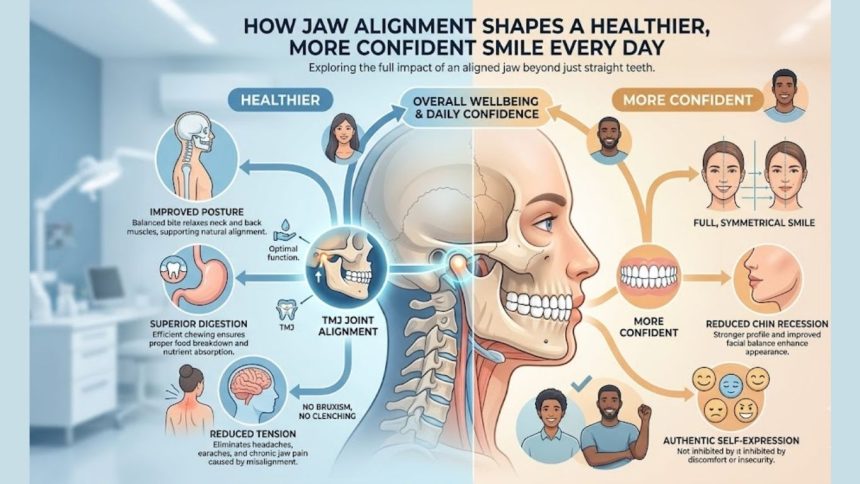
Your smile is often one of the first things people notice, but its appearance depends on more than just clean, healthy teeth. The position of your jaw plays a significant role in how your teeth fit together, how your facial features appear, and how comfortably you speak and chew. Understanding this connection can help you recognize why balanced jaw alignment is essential for both confidence and long-term oral health.
The Relationship Between Jaw Alignment and Your Smile
Jaw alignment refers to how the upper and lower jaws fit together when your mouth is closed. When these structures are properly aligned, the teeth meet evenly, allowing them to function efficiently during everyday activities like eating and speaking. Balanced alignment also supports facial symmetry, creating a naturally harmonious appearance.
Even small alignment issues can affect the overall look of your smile. Teeth may appear crowded, uneven, or spaced apart because the jaws are not providing adequate support. While many people focus solely on straightening teeth, the underlying position of the jaw can significantly influence the outcome.
The jaw also provides the foundation for your facial profile. A jaw that sits too far forward, too far back, or slightly off-center may change the balance between the chin, lips, and cheeks. These differences can make a smile appear less proportionate, even if the teeth themselves are healthy.
Common Signs of Jaw Misalignment
Not every jaw alignment issue is immediately obvious. Some people experience only subtle cosmetic concerns, while others develop functional problems that gradually become more noticeable over time.
Common signs may include:
- Difficulty biting or chewing food evenly
- Frequent jaw discomfort or stiffness
- Clicking or popping sounds during movement
- Uneven tooth wear
- Teeth that do not fit together properly
- Chronic headaches related to muscle strain
- Facial asymmetry
Some individuals adapt to these symptoms without realizing that jaw alignment is contributing to the problem. As the body compensates, surrounding muscles may become overworked, leading to discomfort in the jaw, neck, or shoulders.
Children and teenagers may also develop alignment concerns while their jaws are still growing. Early evaluation can sometimes help identify developing issues before they become more complex in adulthood.
The Impact on Everyday Activities
Jaw alignment influences much more than appearance. Every bite you take relies on coordinated movement between the jaw joints, muscles, and teeth. When these components work together efficiently, eating feels comfortable and natural.
Poor alignment can create uneven pressure during chewing, forcing certain teeth to absorb more force than others. Over time, this may contribute to excessive wear, cracks, or sensitivity.
Speech can also be affected. Certain sounds require precise tongue and jaw positioning, and significant alignment differences may influence pronunciation or speech clarity.
How Jaw Alignment Affects Long-Term Oral Health
The effects of jaw alignment extend well beyond cosmetic appearance. An imbalanced bite can place additional stress on the teeth and supporting structures, increasing the likelihood of future dental concerns.
Uneven pressure may gradually wear away enamel, making teeth more vulnerable to sensitivity and decay. Misaligned teeth can also be more difficult to clean effectively because tight spaces or overlapping surfaces may trap plaque and food debris.
Gum health may also suffer when excessive force concentrates on specific teeth. Over time, this pressure can contribute to gum recession or weakening of the bone that supports the teeth.
Jaw joints experience similar stress. Continuous imbalance can strain the muscles responsible for opening and closing the mouth, leading to discomfort or limited jaw movement.
Maintaining proper alignment supports healthier function across the entire oral system, reducing unnecessary strain while improving overall comfort.
Treatment Options for Improving Jaw Alignment
The appropriate treatment depends on the severity and underlying cause of the alignment issue. A comprehensive examination typically evaluates the teeth, jaw joints, facial proportions, and bite relationship before making recommendations.
For mild concerns, orthodontic treatment may improve tooth positioning and bite function. In more complex situations where the jawbones themselves are responsible for the imbalance, additional treatment may be considered.
In certain cases, maxillofacial surgery in Richmond, Indiana may be recommended alongside orthodontic care to reposition the jaws into a more balanced relationship. This approach aims to improve both function and facial harmony while addressing concerns that braces alone cannot fully correct.
A Personalized Treatment Plan
Every person’s anatomy is unique, making individualized planning essential. Healthcare providers often use detailed imaging, bite analysis, and facial measurements to determine the most effective course of treatment.
Planning focuses not only on creating a more attractive smile but also on improving chewing efficiency, speech, breathing, and long-term oral stability. Addressing the root cause often produces more lasting results than treating only the visible symptoms.
Recovery timelines vary depending on the selected treatment, but careful planning and ongoing follow-up help ensure progress remains on track throughout each phase.
Supporting Jaw Health Through Daily Habits
Although not every alignment issue can be prevented, healthy habits may help reduce unnecessary strain on the jaw and support overall oral function.
Maintaining regular dental visits allows changes in bite patterns or tooth wear to be identified early. Early intervention often prevents minor concerns from becoming more significant over time.
Avoiding habits such as nail biting, chewing on hard objects, or clenching the teeth excessively can reduce stress on the jaw muscles and joints. If nighttime grinding is present, a dental professional may recommend protective solutions to minimize damage.
Good posture also contributes more than many people realize. The position of the head and neck influences jaw muscle function, and prolonged forward head posture may increase tension in surrounding muscles. Combining proper posture with stress management techniques can help decrease muscle tightness associated with jaw discomfort.
Healthy nutrition supports strong bones and teeth, while regular exercise promotes overall wellness that benefits muscles and joints throughout the body, including those involved in jaw movement.
Conclusion
A balanced jaw does more than enhance the appearance of your smile—it supports comfortable chewing, clear speech, healthy teeth, and long-term oral function. Recognizing the connection between jaw alignment and overall dental health allows you to make informed decisions about treatment when concerns arise. Seeking professional evaluation early can help protect your smile while improving comfort and confidence for years to come.