Technical Standards in Food and
Beverage Processing Plants
Technical Standards in Food and
Beverage Processing Plants
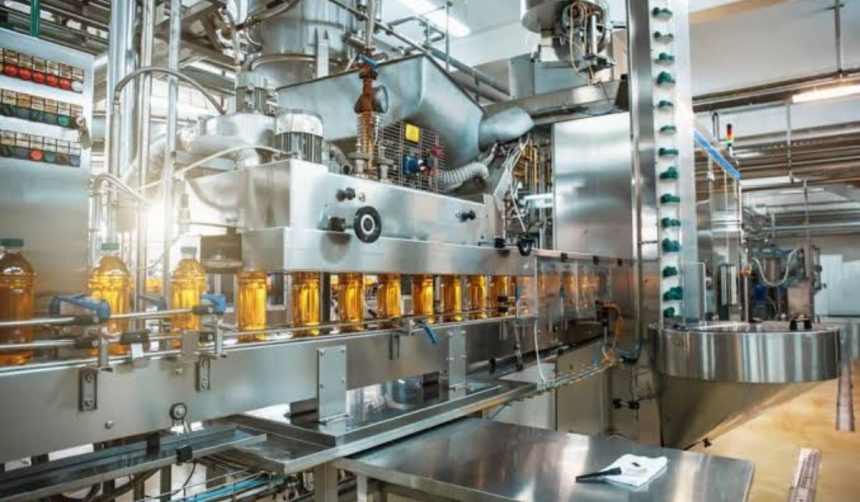
Food and beverage manufacturing requires specialized infrastructure designed to maintain strict sanitary standards. Contamination risks require non-porous surfaces, seamless joints, and complete drainability to eliminate bacterial growth points. Fluid distribution systems in these plants must withstand aggressive cleaning chemicals, thermal shocks, and continuous daily operation.
Hygienic Material Standards
Materials used in food contact zones must resist corrosion, pitting, and chemical degradation from sanitation agents.
- 316L Stainless Steel: The standard material for liquid food transfer due to its high molybdenum content, which resists pitting from salts and acids.
- Polished Interior Finishes: Smooth internal surfaces prevent organic matter from adhering to pipe walls.
- Food-Grade Elastomers: Seals and gaskets must resist degradation from fatty acids and high sanitation temperatures.
Clean-in-Place System Design
Clean-in-Place systems automate sanitation by circulating chemical washes, rinses, and sanitizers through the processing lines without requiring equipment disassembly.
- Pre-Rinse Cycle: Water washes away loose food particles and debris.
- Caustic Wash: Alkaline solutions break down fats, proteins, and organic residues.
- Intermediate Rinse: Fresh water removes residual cleaning chemicals.
- Acid Wash: Acidic solutions dissolve mineral scale and hard water deposits.
- Final Sanitizing Rinse: High-temperature water or chemical sanitizers eliminate microbial bacteria.
Thermal Processing and Liquid Transport Efficiency
Food and beverage manufacturing often relies on precise thermal controls to pasteurize, cook, chill, or freeze ingredients during production.
Pasteurization and Heat Transfer Systems
Heat exchangers rely on continuous liquid movement to bring dairy products, juices, and sauces to precise pasteurization temperatures. Maintaining uniform velocity prevents burning or uneven heat distribution, which compromises product safety and flavor profiles.
Viscous Product Conveyance
Conveying high-viscosity products like peanut butter, honey, or chocolate sauce requires specialized equipment.
- Positive Displacement Pumps: Maintain uniform flow rates regardless of product viscosity variations.
- Jacketed Lines: Heated outer sleeves keep product temperature consistent to prevent hardening inside lines.
- Specialized Fitting Design: Utilizing specialty piping in Utah ensures seamless transitions, minimizing friction loss and shear stress on sensitive food products.
Quality Assurance and Cross-Contamination Prevention
Maintaining product purity requires total segregation of different product lines and utility supply streams within a single facility. Cross-contamination ruins entire batches, leading to costly product recalls and brand damage.
Preventing Cross-Contamination Hazards
Facilities must isolate cleaning chemicals, non-potable utility water, and raw ingredients from finished food products. Backflow preventers, air gaps, and double-block-and-bleed valve arrangements ensure that utility fluids never mingle with consumable food lines.
Maintenance Protocols for Hygienic Facilities
Sanitary performance depends on rigorous maintenance routines.
| Maintenance Task | Primary Purpose | Schedule |
| Gasket Replacement | Prevent bacterial accumulation in worn elastomeric joints | Semi-annual |
| Surface Roughness Inspection | Verify interior smoothness remains within acceptable hygienic limits | Annual |
| CIP Flow Rate Validation | Ensure wash solutions reach turbulent flow speeds for proper scrubbing | Monthly |